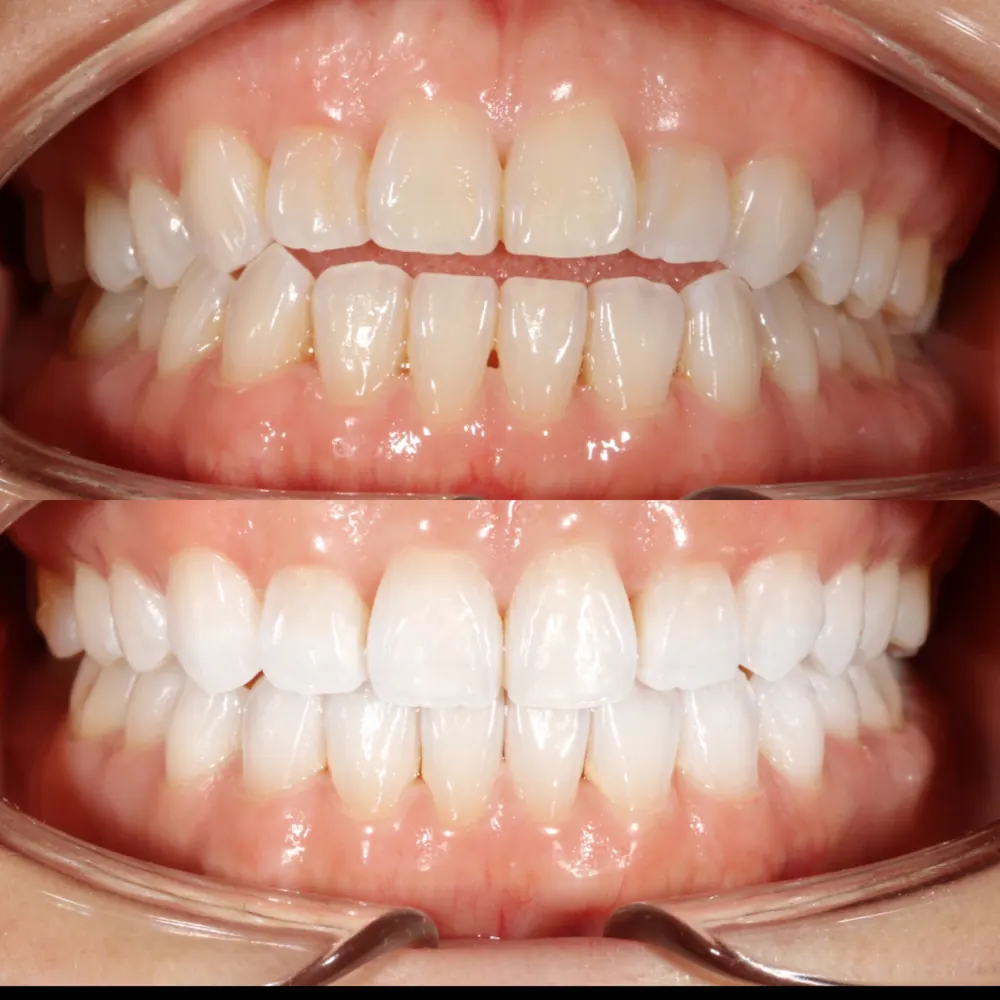
Adults with crowding, gaps, an open bite, or teeth that moved after braces are good Invisalign candidates. Teens, severe jaw-position problems, teeth that have not come in properly and cases that need jaw surgery are usually better served by an orthodontist.
Which problems does Invisalign handle well?
Mild to moderate crowding, gaps between teeth, an open bite where the front teeth do not meet, and relapse, which is when teeth drift after braces because a retainer was not worn. In those cases the teeth need to move a few millimeters, and clear aligners can do it in steps. The dentist at Dentistry of San Francisco treats these cases with Invisalign and is an Invisalign Silver provider.
When is an orthodontist a better choice than Invisalign?
When the problem sits in the jaw or in how the teeth are erupting, beyond where the crowns sit. This practice sends the following to an orthodontist: teens, severe skeletal class 2 and 3 bites, impacted teeth and eruption problems, and patients who need orthognathic surgery. Those cases need growth monitoring, specialist appliances or surgical planning that a general practice does not manage.
Why does it matter which kind of dentist does my Invisalign?
Because aligners can look like a shortcut. If a bite problem is skeletal, aligners can straighten the teeth and leave the underlying problem in place, and the result may be unstable. Hearing at the start that a case belongs with an orthodontist saves time and money.
Can I have veneers instead of Invisalign?
Veneers change the surface of teeth without moving them, so they suit chips, stains and small shape issues. If your teeth are crowded, aligners are usually the sounder foundation. Veneers or Invisalign walks through that comparison.
What happens after Invisalign aligners are done?
Teeth want to return to where they started, so retainers are part of the plan. Patients at this practice receive Vivera retainers after treatment, and progress during treatment is checked in the office every two months. For the daily side of treatment, read whether you can keep your normal routine with Invisalign.
What is the first step to start Invisalign?
A consultation. It is free for Invisalign, and it is where the dentist checks your bite and tells you whether this is a case to treat here. You can find more on the Invisalign page or book online.
Disclaimer: This information is provided for educational purposes and is not a substitute for professional medical advice, diagnosis, or treatment. Please schedule a consultation with our team to discuss your individual needs. This article does not establish a physician-patient relationship.